
You probably shouldn't ditch your paywall
PLUS: Why CBS News is losing viewers
Welcome! I’m Simon Owens and this is my media industry newsletter. If you’ve received it, then you either subscribed or someone forwarded it to you.
If you fit into the latter camp and want to subscribe, then you can click on this handy little button:
Let’s jump into it…
How a 100-day writing challenge became a 9-year, $227k/year media business — with no ads or paywall.
A newsletter that summarizes the day’s political news has over 200,000 free subscribers and generates $227,000 a year on a pay-what-you-can model. [Creator Spotlight]
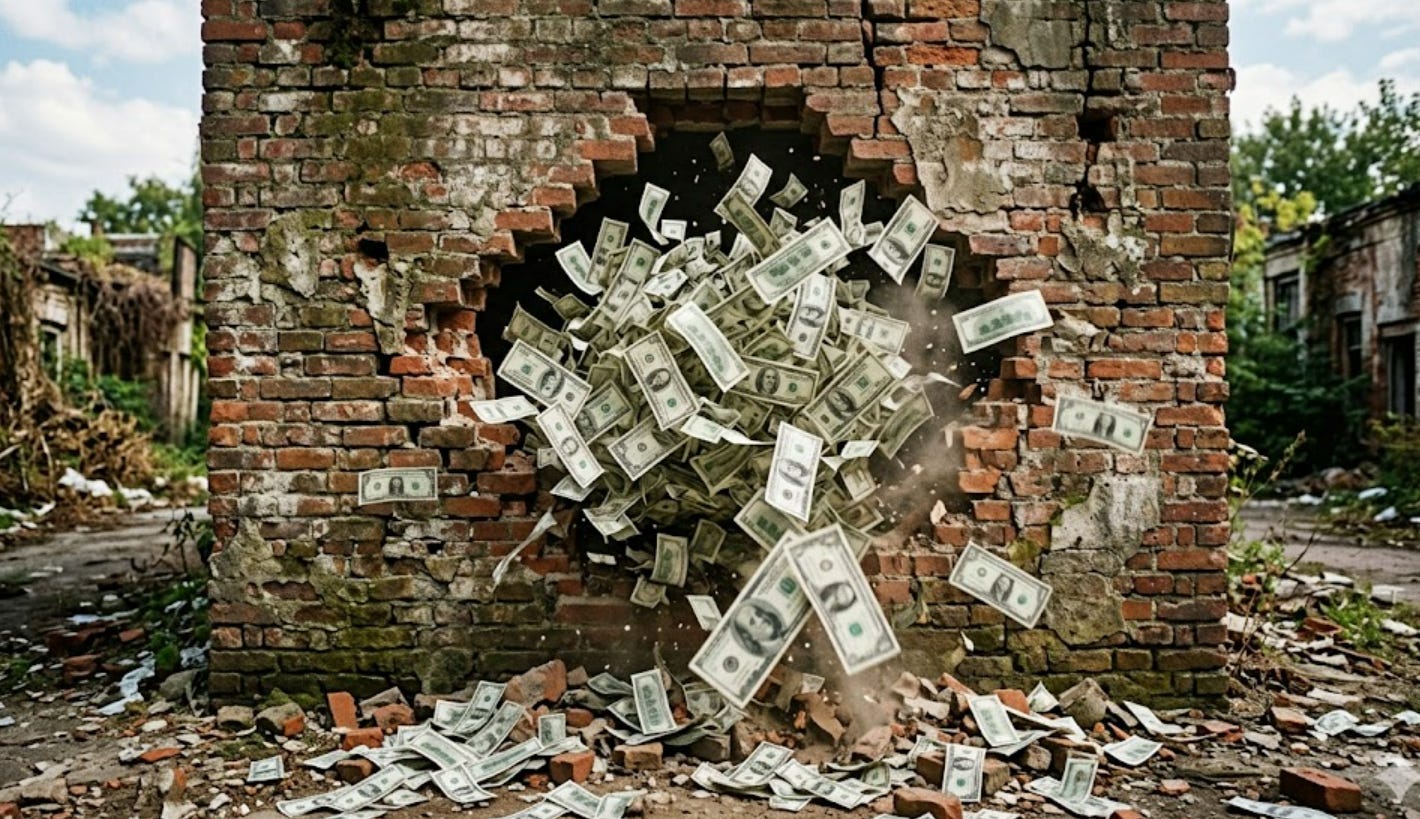
While many creators are tempted by business models that keep all content free, the success stories tend to be outliers. Even if you can guilt readers into subscribing, those subscriptions often come with high churn. When people look to cut expenses, they’re most likely to cancel subscriptions that don’t offer any tangible benefits.
Competition is also intense for charity-driven models—even among mission-oriented publications. I recently had dinner with a friend who runs a left-leaning newsletter that saw a surge in paid subscriptions after Trump’s election. Now, a significant share of those readers are canceling, likely because there’s no shortage of similar anti-Trump outlets competing for their attention.
For any subscription strategy, the best approach remains the same: create a unique offering that can’t be found elsewhere, and charge for access. It’s that simple.
The media distribution stack is being rebuilt. Is your sourcing workflow keeping up?
Newsrooms are re-engineering how stories move — from AI-assisted production to automated distribution and analytics. The modern publishing stack is increasingly built to speed up time-to-publish and create signal in an environment flooded with content.
But one core workflow still slows reporting down: sourcing.
As inboxes fill with AI-generated commentary and mass-pitched outreach, finding credible human expertise has become more important and complex. Verification now sits squarely inside the production process. When sourcing breaks, so does your efficiency.
Today’s sponsor, Qwoted, is building sourcing infrastructure designed for this new media reality.
The platform connects journalists with vetted subject-matter experts through relevance-driven matching that reduces noise and surfaces credible voices faster. Behind the scenes, a human review layer helps ensure the people pitching commentary are real, qualified, and accountable — reinforcing trust at a moment when automation is reshaping the information supply chain.
For reporters and editors, the impact is at the workflow level: fewer dead ends, less time spent on outreach validation, and a stronger, more diverse expert network that compounds over time. And, Qwoted is free for journalists and newsrooms.
Qwoted provides access to the industry’s largest network of universities, national health systems, Fortune 1000 executive teams, all at a moment’s notice.
If your organization is investing in faster publishing cycles and smarter distribution, it may be time to modernize how you find the voices that power your reporting.
College Athletic Departments Are Becoming Full-Blown Media Companies
The largest college athletic departments aren’t just hiring social media editors — they’re erecting entire media outlets that are capable of producing everything from podcasts to longform, streaming-quality documentaries. The goal isn’t just to drive interest toward a school’s games, but also to monetize its channels directly. Some departments can even negotiate NIL sponsorship deals for individual athletes, taking a cut of the revenue in the process. [Front Office Sports]
How AI Is Creeping Into The New York Times
From the Atlantic:
On Sunday, a writer named Becky Tuch posted an excerpt on X from a months-old New York Times “Modern Love”column that had given her pause. “I don’t want to falsely accuse writers” of using AI, she wrote. “But this reads EXACTLY like AI slop.” The excerpt—from an essay by a mother who had lost custody of her son—described the son’s feelings, at one point, toward his mother: “Not hate. Not anger. Just the flat finality of a heart too tired to keep trying.”
Among the 100-plus replies to Tuch’s post was one by an AI researcher, Tuhin Chakrabarty. He’d run the snippet from “Modern Love” through an AI-detection tool from the start-up Pangram Labs, which flagged it as likely having been AI-generated …
Kate Gilgan, the author of the column, told me that she hadn’t copied and pasted language from an AI model into her work. “However, I did utilize AI as a tool,” she added, seeking “inspiration and guidance and correction.” She said she’d prompted various products (including ChatGPT, Claude, Copilot, Gemini, and Perplexity) to help her stay on topic in a paragraph, for example, or stick to a theme. “I used AI as a collaborative editor and not as a content generator,” she said.
I find the witch hunt for AI-generated content a bit misguided at this point. Just because a tool flags something as AI-generated doesn’t mean it was written entirely by AI—more often, people are using these tools to polish and refine their drafts.
It’s also unhealthy for us as a society to encourage social media pile-ons against work that’s merely suspected of involving AI, especially when the detection tools themselves are so prone to error.
Join me for a live Zoom call on Thursday
I’m hosting a live Office Hours Zoom call on Thursday. You should come!
There’s no agenda for this meeting — I’m literally going to show up and chat with whoever’s there. It’s not only a great way to meet with me, but also to network with other successful media entrepreneurs and operators.
If you didn’t go to last week’s Zoom call, here’s what you missed:
1. A former NPR radio host explained how she got Apple to feature her new podcast in the “new & notable” section of its podcast app.
2. The owner of a large business newsletter explained why they moved from Substack to Beehiiv.
3. The publisher of New Zealand’s top business publication explained how he sued companies for sharing login information to his paywalled content.
4. The owner of a tech publisher explained how his journalists use AI to write the first drafts of articles.
You can find the Zoom link over here.
Is Goodell Overplaying His Hand?
From Puck:
As regular readers, sports fans, members of the professional media class, and the guys in legal are now abundantly aware, the NFL is currently in the midst of an upscale shakedown—an attempt to renegotiate its media rights with existing partners, ahead of schedule, and at a premium that could reach 60 percent. Nevertheless, the league is likely going to get what it wants: It’s the juggernaut of American sports broadcasting, and perhaps the last possible defibrillator of linear TV. And its leadership feels understandably devalued following a rash of frothy deals among lesser competitors, such as the NBA ($76 billion) and UFC ($7.7 billion), which reset the market for sports rights.
I don't think anyone would argue with the notion that the NFL is the world's most popular entertainment franchise. What I do wonder though is if it's creating a massive bubble that will inevitably pop. Not only is it spreading its games out across a wide range of streaming apps — forcing its fans into extreme subscription fatigue — but it's also constantly forcing those streamers to pay more and more for broadcast rights. Eventually, the media conglomerates will have no choice but to walk away from negotiations, which will then shrink the bidding pool to a small group of tech behemoths that will suddenly have much more negotiating power.
(BTW, I used a gift link so you can access that article for free.)
‘Elite clippers’ are earning big paychecks by helping podcasters and livestreamers stay in your social feed
There are several large creators who hardly bother to create their own shortform vertical video because they know there's an entire army of "clippers" who will do a better job of chopping up their longform videos and distributing them. Yes, those clippers get to monetize content that they didn't wholly create, but the original creators don't care because they view it as free marketing. It's like those birds who are allowed to live on the backs of large herbivores because they eat the ticks and other parasites buried in the animals' fur. [Business Insider]
Weiss’ Ratings Wipeout
From Status:
With the first quarter set to wrap at week’s end, [Bari] Weiss’ relaunched “CBS Evening News” with Tony Dokoupil is on track for its lowest-rated first quarter of the 21st century in both total viewers and the advertiser-coveted 25-54 demographic, according to preliminary Nielsen ratings obtained by Status.
The biggest problem with Bari Weiss’s attempt to shift CBS News to the right is structural: Fox News dominates because it effectively has a monopoly on right-wing TV viewers. While networks like OANN and Newsmax exist, they’ve never reached the scale needed to seriously compete.
By contrast, the rest of the political spectrum is fragmented across multiple broadcast and cable networks, which is why none of them can match Fox’s audience dominance. Even if Weiss manages to peel off some Fox viewers—which seems unlikely unless CBS leans into overtly pro-Trump coverage—she risks alienating a much larger portion of CBS’s existing audience to the left of Fox.
And that appears to be exactly what’s happening. CBS News has lost viewership since Weiss took over, while both ABC and NBC have gained—suggesting that CBS’s audience is actively migrating to competing networks.
As a reminder, billionaire failson David Ellison paid $150 million to learn this lesson I could have given him for free. It’s why I’m pretty confident the Paramount-WBD merger will be a colossal failure and that Netflix will be able to scoop up the combined company for pennies on the dollar in a few years.
‘It’s Personality Theft’: How Creators Are Fighting Back Against AI Deepfakes
It's becoming more and more common for even small creators to come across AI-generated avatars of themselves hawking products. In some cases, the companies behind the products are completely legitimate and aren't even aware that their ads contain AI fakes, since they hired outside marketing firms to handle the ad buys. [Rolling Stone]
How Taegan Goddard built a thriving paid membership for Political Wire
Most publishers that launch some kind of paid subscription product do so out of economic necessity. Subscription models are born out of a media company’s recognition that the online advertising market, as it currently stands, is not sufficient in its ability to fund quality journalism, thereby requiring the company to rely directly on its readers to close the revenue gap.
Taegan Goddard, however, contends that Political Wire, the aggregation and analysis site he founded and runs, was perfectly sustainable when he rolled out his paid membership program a half decade ago, and that he only did so to provide a way for his most loyal readers to bypass the site’s ads. “I found with programmatic ads that the incentives that exist between the publisher, the reader, and the advertiser are broken,” he told me. “The great thing about print newspapers was that the publisher would have to make sure that they were servicing both the advertiser as well as the reader in order to keep the business intact. And what happened with programmatic advertising was all of a sudden the advertisers had no idea that their ads were even being placed on your website.”
By launching a membership program, Goddard was able to forge a more direct connection with a readership that he’d spent the better part of two decades growing. I recently spoke to him about his early monetization strategies and how he expanded into paid memberships. [Simon Owens]
TikTok is casting actors to make its own micro dramas as it jumps headfirst into the hot format
From Business Insider:
TikTok is getting serious about mini dramas. It recently began testing a dedicated short drama feed in the US and a few other markets. Now it’s preparing to make its own shows.
The company is casting for a new short-drama production this month, recruiting actors for a soap opera-style project, according to an email sent by a TikTok staffer viewed by Business Insider.
TikTok realized that the existing microdrama studios aren't going to publish natively to its platform without a way to generate meaningful revenue, so now it's trying to seed this sort of content itself. It's worth noting that the major tech platforms don't have a good track record when it comes to producing their own original programming — just ask the folks who ran YouTube Originals or Facebook Watch.
The Sora-Disney Collapse: What Does It Mean?
From the Hollywood Reporter:
The bomb dropped on Tuesday afternoon. OpenAI was closing down Sora, and its Disney deal was over. The big video-generation tool that was supposed to turn Disney+ into a user-generated paradise — or a field of memeslop, depending on your point of view — is no longer. And maybe, with it, OpenAI’s Hollywood ambitions are gone, too.
Is there any better way to signal to the world that you're not a serious company than blowing up a $1 billion deal with the world's largest media conglomerate three months after you signed it? How eager will companies be to partner with OpenAI going forward?