
How Austria’s biggest explainer podcast built a sustainable independent media business
Andreas Sator walked through the origin story of his podcast “Explain The World to Me.”
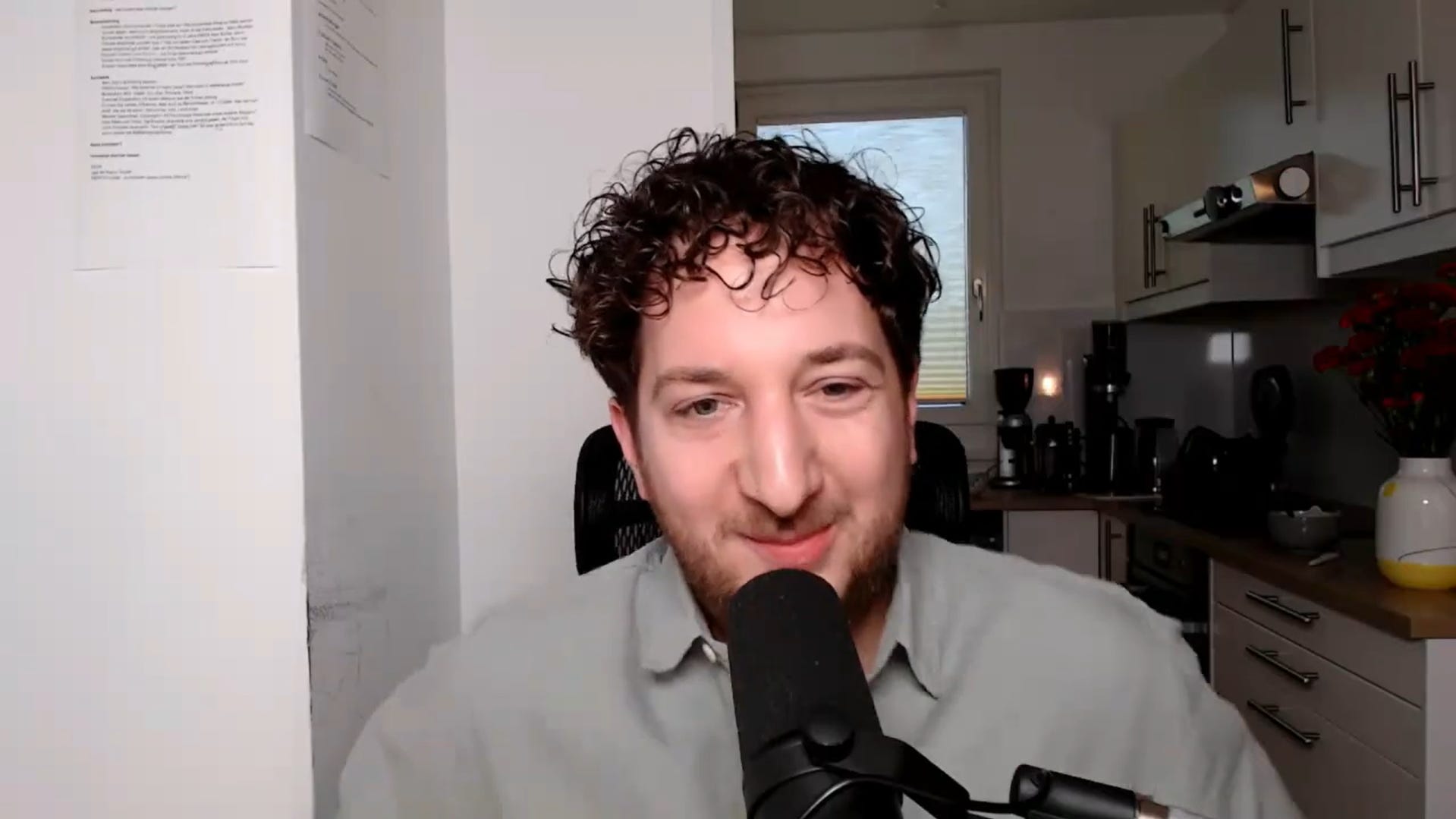
When Andreas Sator started working as an economics reporter at the Austrian newspaper Der Standard, he found himself trapped in a familiar journalistic frustration: he was writing about enormously important subjects that many readers simply didn’t understand. Stories about bond markets, eurozone policy, or the Greek debt crisis often relied on technical concepts that large portions of the audience had never encountered before. The problem wasn’t that readers lacked curiosity. It was that traditional journalism rarely slowed down long enough to explain the basics.
That realization ultimately led Sator to launch Erklär mir die Welt — German for “Explain the World to Me” — a longform explainer podcast that has since become one of Austria’s most successful independent media properties. What began in 2018 as a side project produced while still working part-time at a newspaper has evolved into a multi-revenue media business reaching roughly 60,000 monthly listeners, generating around €150,000 in annual revenue, and spawning a second niche podcast focused on climate and biodiversity. Along the way, Sator has built a business that reflects a broader shift happening across global media: audiences increasingly gravitate toward trusted personalities who can make complicated subjects feel approachable, conversational, and human.
In our interview, we discussed the Austrian podcast market, how he monetizes the podcast, and why he decided to launch a new show about climate change.
Let’s jump into it…
Discovering the Power of Explainer Journalism
Sator’s path into podcasting began long before audio entered the picture. He originally studied economics and entered journalism through traditional media, covering economic policy and financial crises for Der Standard, one of Austria’s largest left-leaning newspapers.
But after several years of daily reporting, he began to feel constrained by newspaper journalism. “I started to get a bit bored by this daily rhythm of going into the office, talking to a bunch of people, writing an article, and then doing the same thing the next day,” he said.
The turning point came when he launched a personal finance column documenting how he would invest €10,000 of his own savings. Rather than writing abstract investment advice, Sator used his own experience as the organizing framework. He explained concepts like ETFs, bonds, and equities while publicly walking readers through his decisions.
The column immediately resonated.
Within three months, he had amassed roughly 12,000 newsletter subscribers — an enormous number for Austria’s relatively small media market. More importantly, the feedback was fundamentally different from the responses he had received as a traditional economics reporter.
“People found it very useful for their own life,” he said. “And it was also very different because I didn’t hide behind my journalistic neutrality. I was out there with my face and telling people about private things.”
That experience exposed two dynamics that would later define his podcasting strategy.
First, audiences desperately wanted journalism that explained complicated subjects without making them feel unintelligent. Sator realized many readers simply lacked the foundational knowledge necessary to follow traditional economic coverage. “Most people in Austria don’t own shares, they don’t know what bonds are,” he explained.
Second, he discovered the power of personality-driven journalism. By speaking openly about his own finances and learning process, he stopped feeling like a distant byline and started building a direct relationship with readers.
“I was always very interested in how influencers can have such huge crowds supporting them,” he said. “Journalists are among the least trusted professions in our country… so I was always very interested in how I can build a personal relationship with my readers and listeners.”
Using Audio to Build Trust
At roughly the same time, Sator began experimenting with audio inside the newspaper itself. As an economics editor, he interviewed prominent economists like Paul Krugman and Martin Feldstein, but he disliked how heavily those conversations were compressed into written articles.
“You have to edit out like 80–90% of the conversation,” he said.
The refugee crisis in Europe during 2015 further shaped his thinking. Public trust in media was deteriorating, and Sator wanted audiences to hear the full conversations themselves. So he began uploading complete interviews to SoundCloud alongside his newspaper reporting.
Initially, the experiment was modest. He had little data about listener retention, and podcasting itself barely existed in Austria at the time. But the process helped him develop something crucial: an authentic audio persona.
Unlike radio hosts trained to project energy and constant enthusiasm, Sator discovered his strength was calmness.
“I thought I have to be very loud and happy,” he said. “That’s just not the person I am — a calmer kind of guy.”
That understated style eventually became central to his brand. Rather than perform expertise, he positioned himself as a curious guide doing the intellectual heavy lifting on behalf of listeners.
Designing an Explainer Podcast for General Audiences
In 2018, after taking advantage of Austria’s government-supported educational sabbatical system, Sator spent a year traveling, reading, and developing the concept for his own podcast.
The final concept emerged during a conversation with a historian friend who had a gift for explaining complicated subjects without making people feel ignorant.
“You could just ask him, ‘Why did the Roman Empire collapse?’ and he would start talking for 10 minutes and explain it in a way that you get curious and you don’t feel stupid,” Sator recalled.
That became the blueprint for Erklär mir die Welt.
Each episode centers around a single expert explaining a topic in accessible language. The subject matter spans politics, history, climate change, fitness, religion, medicine, and behavioral science. Rather than narrowing into a niche vertical, Sator built the show around intellectual curiosity itself.
The structure is intentionally simple. Episodes typically begin with an advertisement, followed by a longform interview, and conclude with recommendations for books, documentaries, or studies related to the topic. Sator also reflects on what he personally learned from the discussion.
Importantly, he optimized the format for sustainability from the start.
Rather than produce heavily edited narrative audio, he chose an interview format that could be created efficiently while he continued working part-time at the newspaper. That operational simplicity gave him room to slowly grow the audience without immediately burning out financially or creatively.
Paywall incoming…
The rest of this case study is behind a paywall, but if you aren’t ready to subscribe, you can also download it as an ebook over here.