
How a professional voice actor built a hit indie game studio
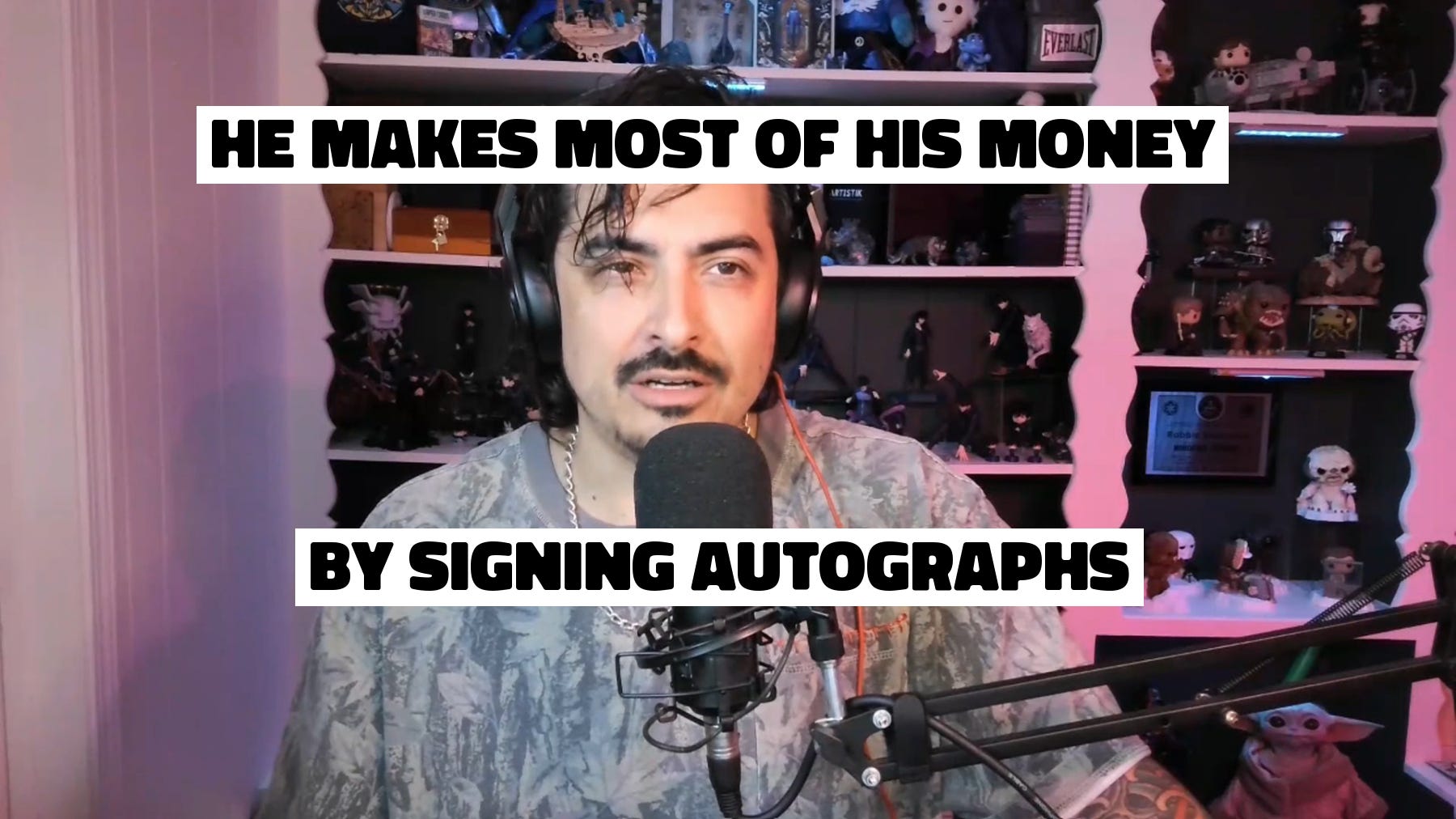
Robbie Daymond explained how he makes most of his income from attending fan conventions.
For most of his career, Robbie Daymond operated in a part of the entertainment industry that rarely produces household names.
As a voice actor, his work spans anime, video games, animation, and audiobooks—roles that generate massive audiences but little personal visibility. Fans might recognize the characters, but not the person behind them. It’s a career built on consistency, range, and volume rather than celebrity.
And yet, over the past several years, Daymond has quietly assembled something that looks far closer to a modern creator business than a traditional acting career. He earns a significant portion of his income not from studios, but from direct fan interactions at conventions. He’s part of one of the most successful direct-to-consumer media companies in entertainment, Critical Role. And most notably, he co-founded an independent game studio that produced one of the fastest-selling dating sims of all time.
His trajectory offers a window into how creative professionals are increasingly moving beyond service-based work toward ownership—of audiences, intellectual property, and revenue streams.
In a recent interview, Daymond explained how fan conventions have quietly become a major revenue engine for creators, why you don’t always need a huge social media presence to build a large audience, and how revenue-sharing models can unlock top-tier creative talent.
Let’s jump into it…
From Grinding Actor to Multi-Platform Voice Talent
Daymond’s career began in the late 2000s, a notoriously difficult period to break into entertainment. He moved to Los Angeles in 2007, just as the industry was hit by both the writers’ strike and the financial crisis.
“It was a war of attrition,” he said. “Everyone who stayed and dug their heels in—the cream sort of rose to the top.”
Like many actors, he initially pursued a mix of theater, on-camera work, and voice roles. But over time, voice acting began to dominate—not because of a strategic pivot, but because of opportunity density. He was booking enough voice work that it crowded out other opportunities.
“I was working so regularly that I was missing auditions,” he said. “That’s a great problem to have.”
By the early 2010s, he had built a steady pipeline of roles across cartoons, anime, and video games, including major franchises like Final Fantasy XV and Sailor Moon. Unlike many voice actors who specialize in a single niche, Daymond developed a rare multi-category career spanning animation, gaming, and audiobooks.
That breadth mattered—not just creatively, but economically. It diversified his income streams and positioned him to take advantage of emerging creator-driven opportunities that extended beyond traditional studio work.
The Hidden Economics of Fan Conventions
One of the most consequential—and under-discussed—elements of Daymond’s business is fan conventions.
For decades, conventions carried a stigma in Hollywood, often viewed as a fallback for actors whose careers had cooled. That perception has flipped. Today, conventions are a core revenue stream for a wide range of talent, from voice actors to A-list celebrities.
Daymond attends as many as 30 conventions per year. The model is straightforward but powerful: conventions cover travel and accommodations, provide a guaranteed minimum payout, and then allow creators to earn additional revenue through autographs and photo ops.
At his current pricing, Daymond charges around $60 per signature. But the real value isn’t just the transaction—it’s the scale and consistency of demand.
“In some shows, people might wait six to eight hours to see you,” he said.
Over time, conventions have shifted from a marginal income stream to a central one.
“Ten years ago it was maybe 80/20 conventions to work,” he explained. “Now it’s probably 70/30 the other way.”
That reversal reflects a broader industry trend: as residuals have declined and streaming has compressed traditional payouts, direct-to-fan monetization has become increasingly important.
But conventions also serve another function—they provide a real-world proxy for audience size and engagement. Unlike social media metrics, which can be inflated or misleading, convention lines represent actual demand.
“It’s empirical. It’s immediate. It is the lines that people line up to see,” he said.
This dynamic has led Daymond to a somewhat counterintuitive conclusion: social media following is far less important than many in Hollywood assume.
Why Audience Growth Doesn’t Always Require Social Media Optimization
Despite having hundreds of thousands of followers, Daymond has never pursued a deliberate social media growth strategy. He doesn’t optimize content, chase algorithms, or treat his platforms as a core business asset.
“I’ve got no interest in promoting myself,” he said. “I just enjoy showing what my life is like.”
More strikingly, he’s observed that audience demand can grow even as social media activity declines. His business partner, fellow voice actor Ray Chase, largely stepped away from posting—and saw his convention lines increase.
“I thought, you’ve got to stay relevant,” Daymond said. “And then his lines have only gotten longer.”
The implication is that, at least in certain creative niches, output and cultural presence matter more than platform-native engagement. Fans discover creators through the work itself—shows, games, performances—rather than through personal branding.
This runs counter to much of the prevailing advice in the creator economy, but aligns with a growing subset of creator businesses that prioritize product over personality.
Learning From Creator-Led Media Companies
Daymond’s exposure to creator-driven businesses expanded significantly through his involvement with Critical Role, a live-play Dungeons & Dragons series that has evolved into a full-fledged media company. Daymond frequently appears as an on-screen participant in many of its episodes.
What began as a simple livestream grew into a multi-platform operation that includes animated series on Amazon, a proprietary streaming service, publishing, and merchandising. Crucially, it has maintained independence throughout its growth.