
How a failed consulting strategy led to a successful B2B media business
Philip Ideson explained how The Art of Procurement turned a niche podcast into a thriving B2B media business.
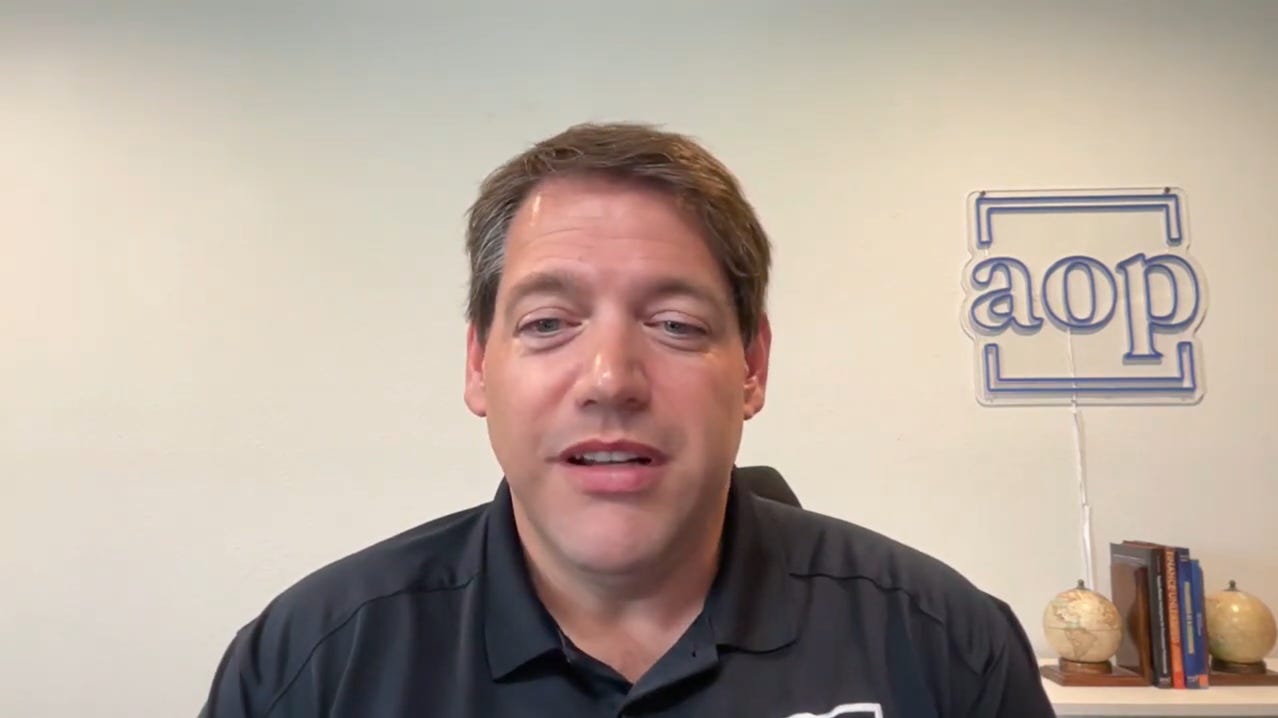
Editor’s note: This case study is based on an interview I conducted in 2023. I’m currently on vacation and plan to return to regular programming on the week of July 6th.
When Philip Ideson left his corporate career in 2015, he wasn’t trying to build a media company.
After spending more than 15 years working in procurement — first inside major corporations and later as a consultant helping companies rethink their procurement operations — he assumed his next chapter would look a lot like his previous one. He would launch his own consulting firm, use his industry expertise to attract clients, and build a business around advising procurement teams.
The podcast he launched that year was simply supposed to be a marketing channel.
Ideson had noticed that, despite procurement’s importance inside large organizations, there weren’t many people creating thoughtful content for the profession. Procurement teams oversee one of the largest expense categories inside any major business, managing relationships with thousands of suppliers that provide everything from software to manufacturing materials. For some companies, hundreds of millions or even billions of dollars flow through these relationships every year.
Yet the industry remained relatively underserved by media.
“I looked around and thought, you know what, there’s not really that many procurement podcasts,” Ideson said. “So let’s start a podcast as well. But that was always going to be just a nice-to-have to support the consulting business.”
That podcast, The Art of Procurement, would eventually become the company itself. But the path from industry expert with a microphone to sustainable B2B media entrepreneur was anything but straightforward.
For years, Ideson struggled to figure out whether he was running a consulting firm, a training company, a community, or a publication. The audience was growing, the reputation was improving, and major companies were paying attention — but the business model lagged behind.
“It took me a few years to figure out, am I a consulting business or am I a media business?” he said. “And that was a really difficult period of time from a revenue perspective, because if I didn’t know what I was, then it was hard to project to anybody else what I was.”
The breakthrough came when he realized he was trying to monetize the wrong side of the marketplace.
In our interview, he talked about his motivation to launch the company, how he built his audience, and why he struggled so long to find a viable business model.
Let’s jump into it…
Building influence before finding the business model
Before launching The Art of Procurement, Ideson had built exactly the kind of career that gave him credibility with his future audience.
He worked in procurement roles at companies including Ford, Pfizer, and Chiquita before moving into consulting. Eventually, he joined Accenture after it acquired the firm where he worked.
But despite reaching a level of career success he once aspired to, he wanted to build something of his own.
“I was always fairly risk averse,” he said. “So I was worried about quitting my job — probably as good a job as I ever thought that I would be able to get — to go and do something on my own.”
The original plan was straightforward: build a consulting business focused on helping companies structure their procurement teams. The podcast would simply help him establish authority and open doors.
It also solved another problem. Ideson described himself as an introvert, and hosting a podcast gave him a reason to reach out to executives and experts he admired.
“I used it as a channel to get to know people that ordinarily may not give me the time of day,” he said. “If I give them a platform, people that I looked up to and wanted to learn from, then they’re more likely to pick up the phone.”
The strategy worked — at least from an audience-building perspective.
He consistently published episodes, interviewed respected voices in the procurement world, and slowly became a trusted source of information in the industry.
What it didn’t immediately produce was revenue.
For several years, Ideson experimented with different monetization models. He tried consulting. He experimented with paid communities. He explored training products.
Nothing quite clicked.
The irony was that externally The Art of Procurement looked successful. People in the industry recognized the brand. Listeners praised the content. Companies wanted to participate.
But behind the scenes, the economics were difficult.
“I kept sailing past all of the checkpoints that I put in place,” he said. “If I don’t make this amount of money by this amount of time, it’s time to get a real job.”
Instead, he kept doubling down.
He sold his house, moved across the country, emptied his retirement savings, and continued betting that the audience and trust he was accumulating would eventually become valuable.
“I knew that we were creating a lot of value,” he said. “The only measure I cared about was how much money was left in my account. But from a brand perspective and a reputation perspective, I knew we were really building something.”
The realization that changed the business
The turning point came when Ideson reconsidered who his actual customer was.
For years, he had focused on selling products and services directly to procurement professionals. That made sense intuitively: they were his audience.
But there was a problem.
Procurement professionals, by nature, were careful buyers. Selling them consulting, training, or memberships required a longer and more difficult sales process.
Meanwhile, an entirely different group desperately wanted access to that audience.
Procurement software companies, service providers, and consulting firms all needed to reach procurement executives. These companies sold expensive products with long sales cycles, and they had dedicated sales and marketing budgets designed specifically for demand generation.
“I realized that selling to sales and marketing folks who are interested in telling stories that help procurement folks make decisions in their jobs would be a faster path to cash,” Ideson said.
That insight transformed The Art of Procurement from a content-driven consulting business into a B2B media company.
The audience stayed the same. The customer changed.
Instead of asking procurement professionals to pay, The Art of Procurement helped vendors reach them.
“The opportunity was on the other side,” Ideson said.
It’s a dynamic that has powered many successful B2B media companies. The most valuable asset isn’t necessarily the content itself; it’s the trust and attention built with a highly specific professional audience.