
If you attend any media conference today, you’ll hear publishers repeat the same mantras: diversify revenue, embrace branded content, build e-commerce funnels, chase sponsorships, add newsletters, podcasts, events, memberships. The unspoken truth behind all that diversification is desperation. Advertising no longer reliably pays the bills, and most legacy publishers aren’t willing—yet—to walk away from it.
Todd Scott is the rare exception who did.
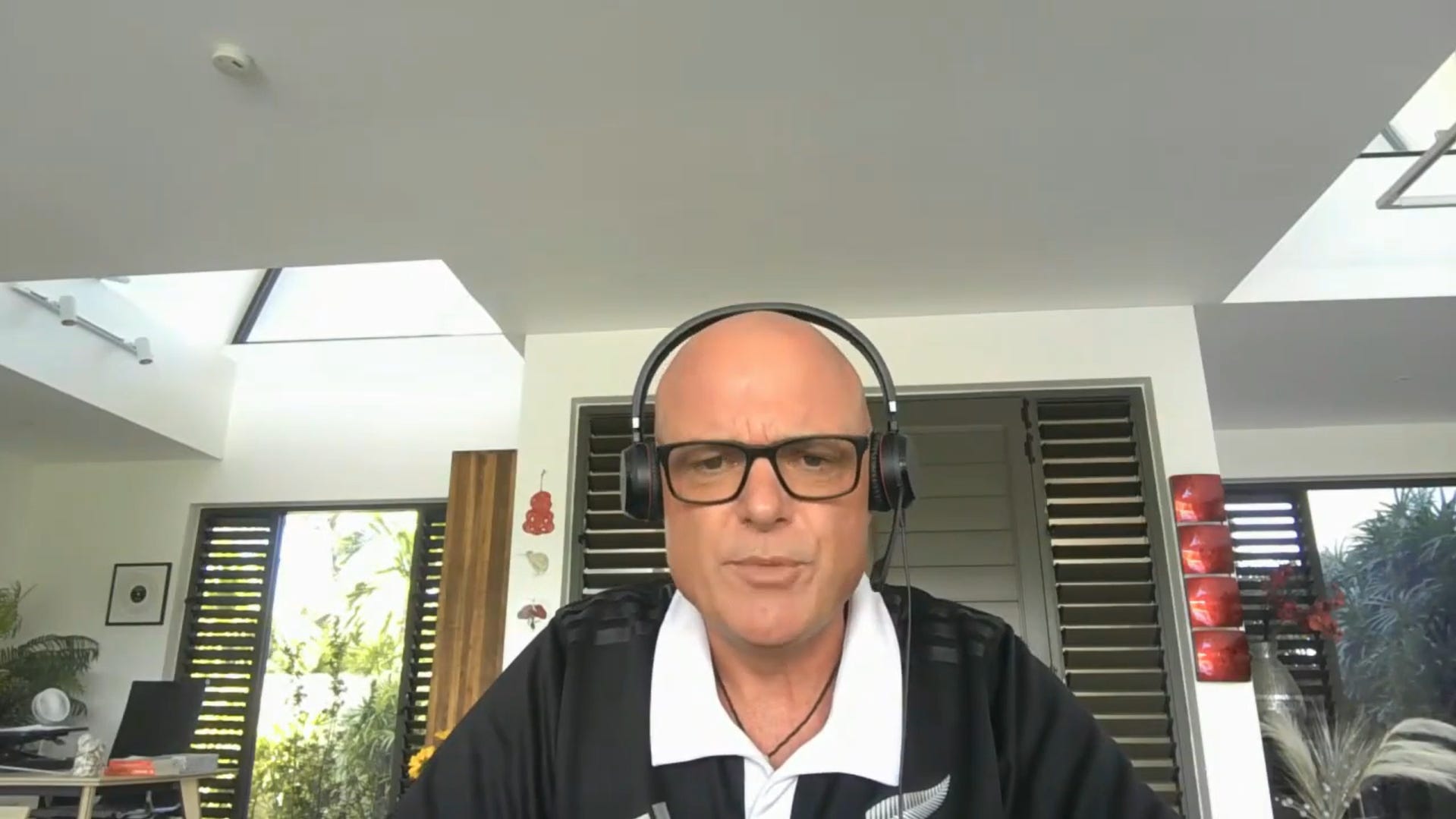
Scott runs The National Business Review, or NBR, a 55-year-old New Zealand business publication that today enjoys more than 14,000 paying subscribers, each shelling out roughly 499 NZD per year. In 2025, it’s projected to bring in $4.5 million in revenue—all of it from subscriptions.
That outcome wasn’t inevitable. Scott’s path into media—let alone into running one of the most powerful business brands in New Zealand—was wildly improbable. He wasn’t a journalist. He wasn’t an MBA. He didn’t rise through the traditional ad-sales ranks. In fact, he started as a butcher.
“I left school when I was 15,” he said. “In 1989, I actually became New Zealand Young Butcher of the Year.” He opened his own gourmet butcher shop at 19. The only reason he ended up in media at all is because he advertised his butcher shop on the radio and found himself fascinated by the medium.
“I literally talked my way into a job,” he recalled. He spent late nights shadowing radio announcers, learning their shifts until, one day, someone got sick and he was called in. Suddenly, he was on the air in Wellington, announcing music and weather reports. Eventually he moved into TV before trying his hand at ad sales, where he found his footing.
“I ended up being very successful selling about $11 million within a 10-year period,” he said. Working with local businesses, he saw firsthand the mismatch between when advertisers bought slots and when audiences actually listened. That instinct for aligning incentives would later shape his philosophy about subscriptions.
But his brush with the NBR began almost accidentally. At a rugby match in Wellington—an All Blacks vs. Ireland game made memorable by freezing weather—Scott met the publication’s then-owner, who wanted to “monetize the website,” which at the time was more of an afterthought to the print weekly. Scott saw parallels between radio and digital publishing: both required understanding audience behavior, attention patterns, and scarcity.
The owner hired him in 2008 as director of sales, just before the global financial crisis hit. That timing, Scott says, forced him to either sink or take over.
“Without speaking to anyone, including him, I literally took over his business,” he said. “I wanted to know where every dollar was being invested… and I really hankered down.”
Fifteen months later, the owner acknowledged what Scott had done. “He sat me down and literally said, ‘You appear to have taken over my business.’” Instead of firing him, he offered a 30% profit share—an arrangement that worked so well Scott earned more than a million dollars a year in the final stretch.
The experience also cemented his desire to buy NBR outright. “This is like playing for the All Blacks,” Scott said. “The National Business Review in New Zealand is literally that respected. You would ring people and tell them where you were from and they would always return your call.”
Eventually, in 2012, he purchased the company—using a half-million-dollar overdraft and scheduled payments every six months. COVID threw the deal into turmoil. When Scott refused to bring back the print edition after lockdown, the previous owner threatened insolvency. Scott bought him out completely in 2020, selling his house and taking out a bank loan to close the deal. The debt was fully paid off only last month.
The Revolution: Killing Ads
For years, NBR monetized through a hybrid model: expensive print advertising, premium digital banners, and a gradually expanding paywall that began in 2009. Scott approached advertising differently from most publishers. Rather than maximizing inventory, he minimized it. He believed scarcity would command higher value.
“I invited our top advertisers to a luncheon,” he said. “I asked for their permission to remove all of the online inventory except the top banner and then charge a $100 CPM.” He packaged impressions across the website and email alerts and sold $5,000-per-month evergreen contracts. From three luncheons, he signed 19 clients.
But even that model never thrilled him. Over the years, the advertising experience became increasingly frustrating—not just for NBR, but for clients.
“The agency landscape was pretty corrupt,” Scott said. “You’d have pimply-faced teenagers ringing up asking, ‘Do you have an online service?’ We’d had one since 2009!”
The deeper issue was ethical. Hosting clients in his corporate box at Eden Park—a perk of his earlier ad-heavy era—Scott realized many advertisers were simply buying space because it was familiar, not because it was effective.
“I remember looking at one of them and thinking, you’ve become a good friend,” he said. “But what you’re doing is bordering on fraudulent. You’re literally throwing colossal money away taking full-page ads when social media allows you to be so much smarter.”
The epiphany led him to an extreme conclusion: advertising wasn’t just ineffective—it was incompatible with the journalism he wanted to produce.
In 2021, in the middle of COVID and in defiance of industry trends, Scott banned advertising entirely.
“We are not beholden to government funding or advertisers,” he told the journalists working for him. “Whatever you were writing before this announcement, go back and read it. If you don’t believe somebody would pay to read it, scrub it and start again.”
He also banned opinion pieces. “Opinion is just someone’s point of view,” he said. “Nobody should have to pay to read that.”
Instead, Scott pushed the newsroom toward deeply reported, original business journalism—the kind people would subscribe to out of necessity, not habit.
Today, NBR employs 15 senior journalists. It has no sales team.
“My staff is about 20,” he said. “We’ll turn over $4.5 million this year. It’s a very clean-cut business.”
Paywall incoming…
The rest of this case study is behind a paywall, but if you aren’t ready to subscribe, you can also download it as an ebook over here.