
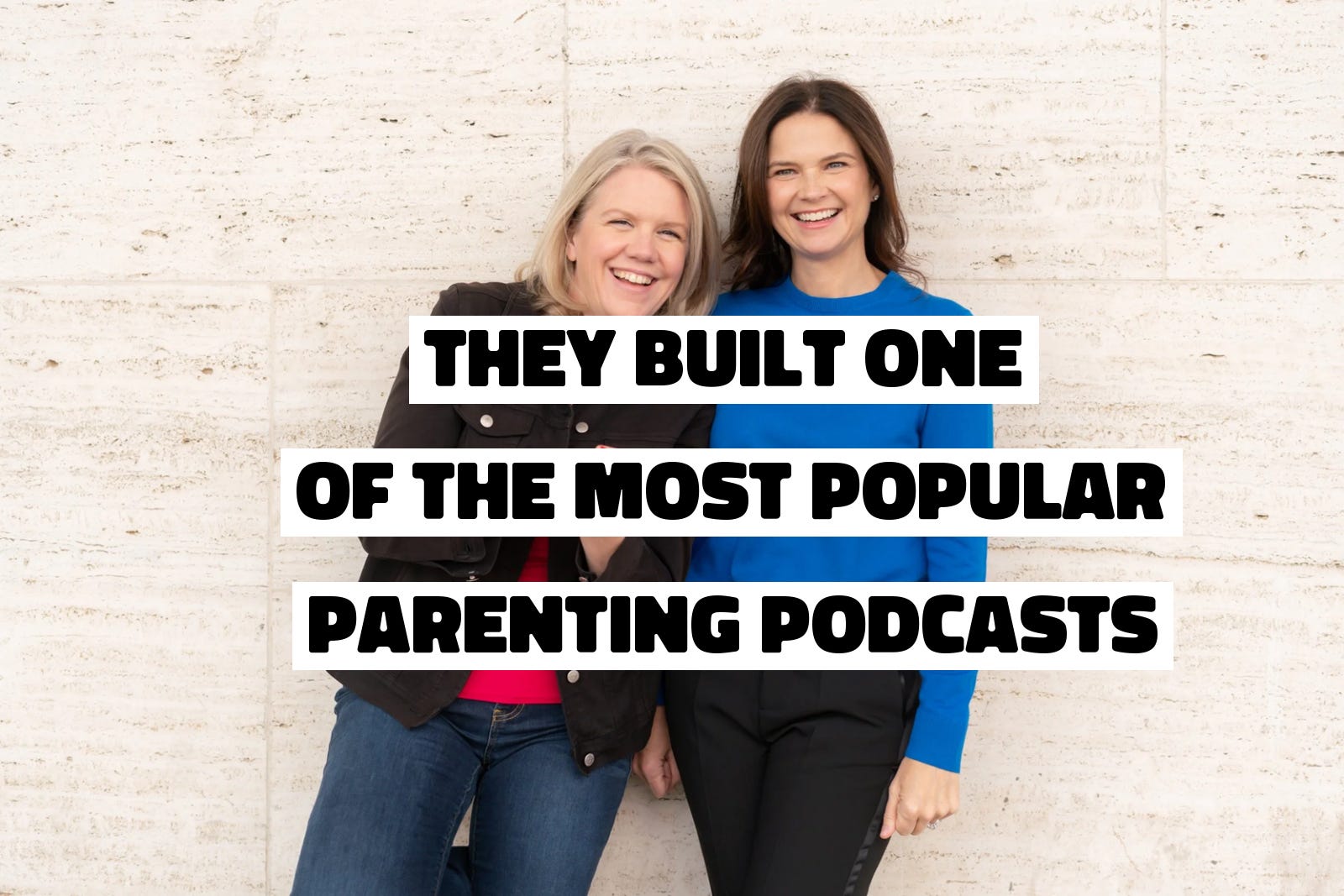
By 2016, Amy Wilson had been a sitcom regular, acted on Broadway, written a book, and launched a one-woman show about motherhood. Yet when she and fellow writer Margaret Ables decided to record a parenting podcast together, it was less a grand strategy than an experiment.
“We just wanted to try it,” Wilson recalled. “We didn't go into this thinking we’d turn it into a money-making venture that'll last a decade. It was just sort of, let's try this. We're creative people. It seems like it might be something fun.”
That “something fun” became What Fresh Hell: Laughing in the Face of Motherhood, a podcast that now draws hundreds of thousands of downloads a month, sells out advertising inventory, and has spun off a podcast network serving dozens of shows targeting female audiences. Along the way, Wilson and Ables have built one of the most enduring brands in the parenting content world—while also weathering seismic shifts in the podcasting industry itself.
This is the story of how Wilson pivoted from traditional acting into digital entrepreneurship, how she and Ables capitalized on the early days of podcasting, and why she believes the best shows will endure even as the industry contracts.
From Sitcom Star to Parenting Content Creator
Wilson’s first act looked like a traditional Hollywood success story. After performing improv in college, she landed an agent and quickly found work in sitcoms. She appeared on The Norm Show with Norm Macdonald, then Daddio with Michael Chiklis, and landed steady commercial work.
But motherhood eventually altered her trajectory. With two children born in quick succession, Wilson could no longer hop on last-minute flights to Los Angeles for auditions. Instead, she leaned into what she knew best: writing about her own experiences as a parent.
Her one-woman show, Mother Load, became a cult hit, running off-Broadway and touring 16 cities across the country. That success led to a book deal for When Did I Get Like This?, which cemented her as a parenting voice at a time when “mommy blogging” was beginning to dominate digital media.
Still, she wondered what came next. “I’d done the show, I’d written the book—now what?” she recalls. That was when Ables, a Nickelodeon veteran and the sister of one of Wilson’s old comedy troupe colleagues, reached out with a proposition: “Let’s start a podcast.”
Paywall incoming…
The rest of this case study is behind a paywall, but if you aren’t ready to subscribe, you can also download it as an ebook over here.