
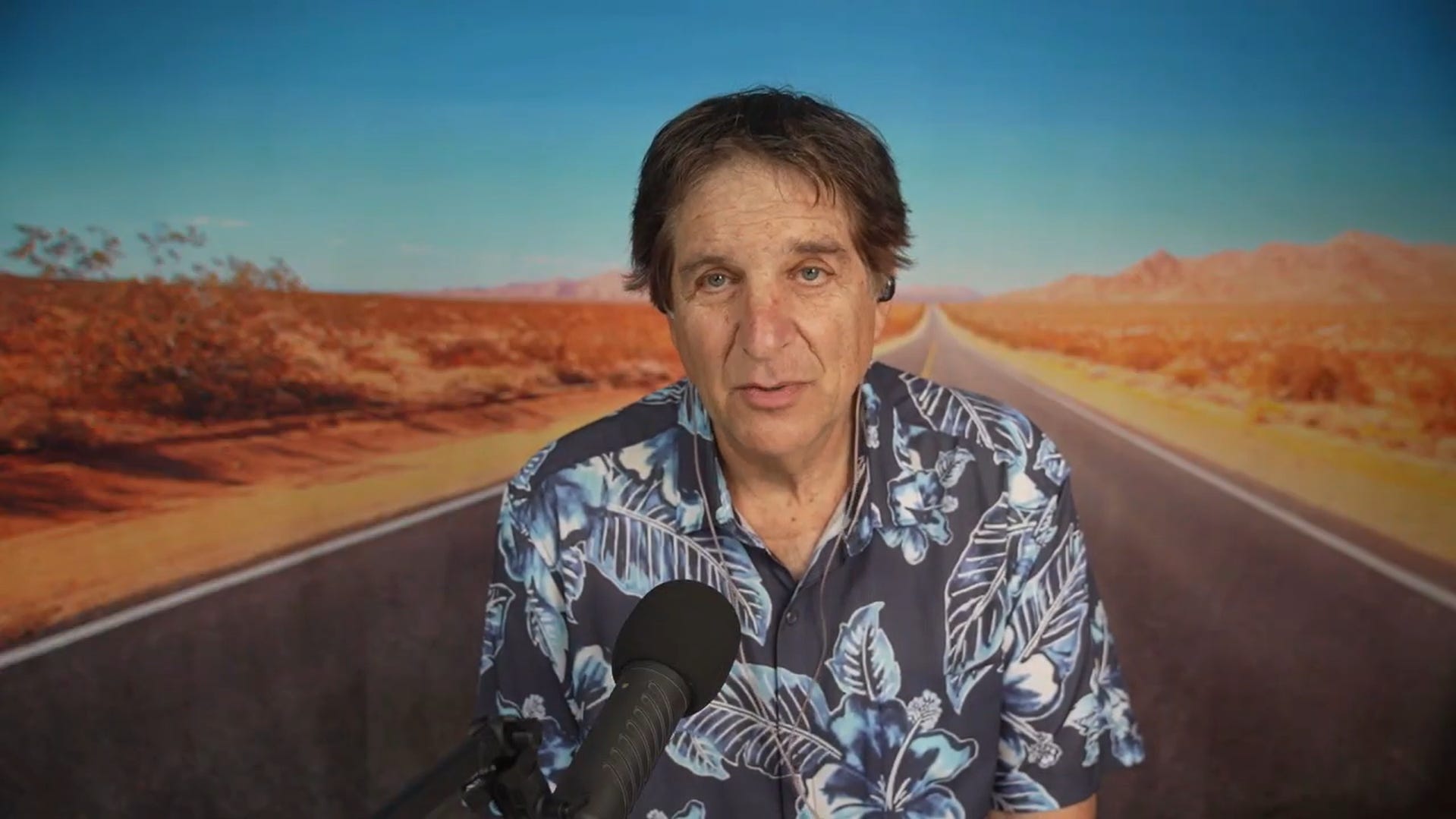
When Jefferson Graham began filming a “video podcast” in 2006, the term barely existed. YouTube was a year old. Broadband penetration was thin. Smartphones were primitive. And yet there he was—propping a camcorder on a tripod in Los Angeles while his USA Today colleague, Ed Baig, did the same more than 2,000 miles away in New Jersey. They couldn’t beam video files across the country, so Baig literally FedExed physical tapes to Graham so he could edit the episodes together.
“We’d tape ourselves in front of our video cameras and have the phone speaker going so we could prompt ourselves,” Graham recalled.
Before livestreaming, before remote recording tools, before the modern creator economy, Graham was already doing what today’s creators treat as obvious.
That early experimentation foreshadowed a second chapter of his career: one in which he would leave a major national newspaper, build a travel-photography YouTube channel from scratch, and ultimately license the show to a national FAST network. It is, in many ways, a case study in how traditional journalism skills can be repurposed into a solo-creator business — and how one veteran reporter reinvented himself as a TV host for the streaming age.
A Three-Decade Newspaper Career That Slowly Shifted Toward Video
Graham spent 30 years at USA Today, beginning on a typewriter and ending as one of the most video-forward journalists in the newsroom.
Like most legacy newsrooms in the mid-2000s, USA Today wanted to look innovative. Video was a way to get there, even if the infrastructure didn’t exist yet.
“They told me the dream was that I would do the show five days a week,” he said of those early video podcasts. “But there was a lot of work.”
Still, Graham managed to turn the experiment into a bigger platform. USA Today eventually gave him a celebrity talk show, “Talking Your Tech,” where he interviewed actors, musicians, and entertainers about the devices and apps they used.
Zendaya, Pierce Brosnan, Gabriel Iglesias, Jason Mraz — Graham interviewed them all, often in hotel rooms, backstage, or on set.
“I would go interview somebody and they’d want to talk about their movie,” he said. “And I’d say, tell me about your favorite app.”
Over time, Graham became one of the paper’s most visible personalities. But as layoffs mounted, the job changed. Beats were consolidated, teams were reduced, and the constant downsizing wore on him.
“Every year was rougher,” he said. “We would have a team of 10 people. Then we’d have a team of seven. And I would just pick up the three people that weren’t there anymore.”
“There were five buyout offers,” he said. “I usually rejected them because I was happy with what I was doing. But by the end…I had this idea about a travel show.”
Paywall incoming…
The rest of this case study is behind a paywall, but if you aren’t ready to subscribe, you can also download it as an ebook over here.